ADA Certified Portable Commode Rental: What the 2010 Criteria Require
Anyone organizing mobile sanitation for an occasion, public event, event, momentary workspace, or neighborhood site typically starts with the basics: the number of devices, exactly how usually they will be serviced, and where they can be put. Accessibility sometimes gets treated as a later information. In technique, it can not be an afterthought.
That is particularly true when people ask for an ada portable commode leasing and presume the solution is simply, "order one bigger system." The 2010 ADA Requirements for Accessible Layout set the managing government access framework, and those criteria reach portable toilet configurations too. The hard component for numerous organizers is not bad intent. It is misinterpreting. They may lease an ada accessible portable washroom yet place it on yard that transforms soft after rain, or tuck it behind various other units where the approach is limited, or fail to offer sufficient obtainable systems in a bank of commodes. On paper, they tried. In operation, the configuration still falls short the people that need it.
I have seen this separate more than once in temporary-site preparation. A team will certainly really feel happy that they inspected the "ADA unit" box, only to find out that availability depends equally as much on place, route, clearance, and configuration as it does on the design itself. The 2010 standards need more than a label.
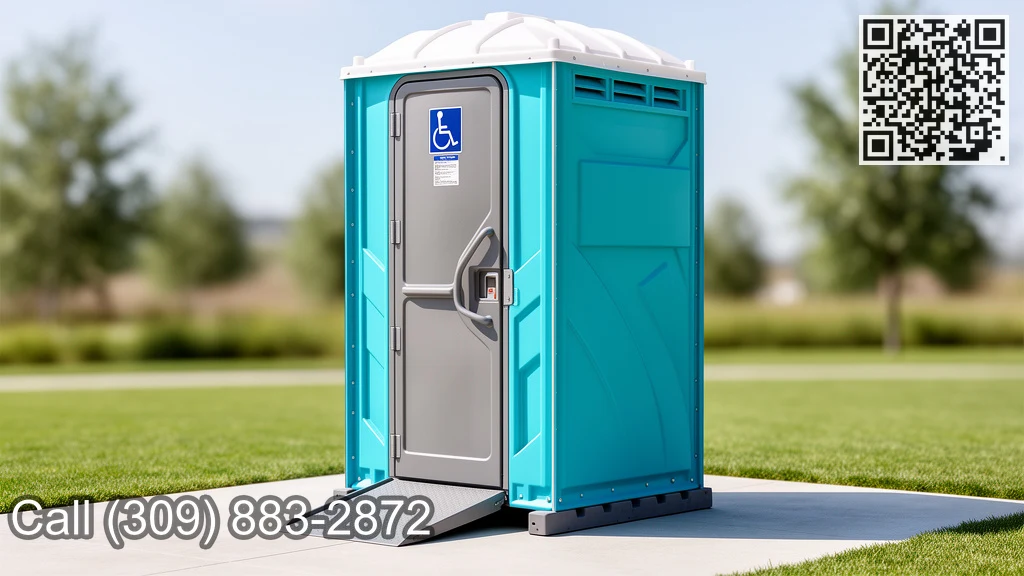
The need starts with scoping, not guesswork
One of the clearest guidelines is also the one individuals miss frequently. When mobile single-user commode units are given in a cluster, at the very least 5 percent of the devices in that cluster need to be accessible. That applies even at temporary events.
That solitary point answers a great deal of common concerns. If you have a bank of portable bathrooms for a reasonable, race, show, college event, or exterior civic program, you do not determine accessibility purely by instinct or by what seems affordable that morning. The requirements use scoping. In simple language, that implies the variety of obtainable units is connected to the variety of devices being supplied in a grouping.
For organizers, that matters since it changes the conversation from "Should we have an ada certified mobile bathroom?" to "The amount of ada compliant mobile commodes are called for in this collection?" Those are very different inquiries. The initial invites improvisation. The 2nd forces planning.
It likewise matters because momentary does not indicate exempt. An unexpected variety of individuals still presume that if bathrooms are rented for only a day or a weekend, the availability rules are looser. The appropriate advice says or else. Temporary events are still anticipated to meet the ease of access scoping need for clustered portable units.
What makes a portable toilet accessible under the standards
People commonly use the expressions ada mobile toilet, ada handicap obtainable portable toilet, and ada-compliant mobile toilet as if they all imply the very same thing. In table talk, that is easy to understand. Under the requirements, though, accessibility is not simply an advertising and marketing term. It depends upon whether the system and its installation satisfy the relevant requirements.
An easily accessible portable toilet device have to be identified with the International Symbol of Ease Of Access. That noting is not decoration. It informs individuals which unit is intended to supply access and assists site team, volunteers, safety and security workers, and attendees identify it quickly.
The system must likewise have an obtainable path and an accessible entryway. That is where several or else well-meaning configurations break down. The easily accessible mobile restroom is ordered correctly, provided on time, and also placed near the various other units. However if the course to it is not available, the result is still a trouble. Similarly, if a ramp or landing is required, those aspects need to abide by the ADA technical needs. A makeshift board laid over mud or a steep improvised threshold may solve a distribution problem, but it does not address accessibility.
Inside the system, the standards also indicate toilet-room technical needs. Those include component clearances, turning space, door navigating clearances, and the relevant regulations for grab bars and water storage room clearances. The essential point right here is that ease of access is a full problem, not a single function. A larger shell by itself does not clear up the concern. A mobile washroom can be marketed or described as larger, roomier, or wheelchair pleasant and still fail if the called for clearances and maneuvering conditions are not there.
That is why knowledgeable organizers ask particular questions when preparing ada certified available portable restrooms. They do not stop at "Is this your ADA system?" They ask just how the entry is dealt with, whether the positioning area sustains an accessible strategy, whether any kind of ramp or landing is needed, and whether the system is correctly designated.
Why placement matters as high as the system itself
There is a functional reality that people that handle outdoor sites find out rapid: the same system can work well in one place and improperly in an additional. The standards recognize that fact by requiring an obtainable path and available entryway, not simply an accessible product.
A common error is putting the ada compliant portable toilet where there is technological area for delivery however bad area for usage. Perhaps it is evaluated the edge of an area since vehicle gain access to is less complicated there. Maybe it winds up behind secure fencing since that was the least disruptive corner. Maybe it is positioned on sloped ground that looked steady throughout arrangement yet ends up being hard once individuals in fact arrive. The problem is not always noticeable to the preparation group initially glance. It comes to be visible the minute a mobility device individual, a person utilizing a walker, or a person with minimal equilibrium attempts to get to and get in the unit.
Another frequent problem is seclusion. Some event teams position the available unit away from the primary collection, assuming they are producing additional room. What they actually produce is hassle and, sometimes, exclusion. If the primary restroom location is where guests naturally go, the obtainable device should not really feel like an afterthought hidden in one more zone. Ease of access works best when it is incorporated right into the site strategy, not bolted on at the edges.
That is why an ada mobile toilet rental decision should take place along with course planning, group circulation planning, and ground condition testimonial. Once trucks have actually provided and fencing is up, poor positioning becomes pricey and irritating to fix.
The 5 percent guideline in real life
The expression "a minimum of 5 percent" seems simple, but it brings real functional consequences. If you are leasing a little cluster, you still need to think meticulously concerning what that implies in method. If you are leasing a huge cluster, the risks are even greater because undercounting obtainable systems becomes easier, not harder. Individuals see a long row of commodes and assume one accessible device someplace in the schedule is enough. The standards say the scoping is connected to the collection, which structure exists for a reason.
Crowd quantity, event duration, and website spread can all influence exactly how useful a certified plan really feels, also when the minimum requirement has actually been considered. I would be careful right here: the verified policy is the 5 percent minimum in each cluster. It does not certify guesswork https://pristineportablesil.com/festival-services/ in the various other direction. If the configuration develops numerous clusters throughout a large site, each cluster requires its own evaluation instead of depending on one available system positioned somewhere else.
This is where mobile cleanliness planning comes to be much less regarding stock and more about dignity. The point of an ada certified mobile commode is not simply to please a list. It is to see to it people can utilize the very same short-term environment as every person else, with functional independence.
Identification is not optional
Because short-lived sites can be loud, crowded, and confusing, correct identification issues more than many planners realize. Obtainable mobile commode devices should be marked with the International Icon of Accessibility.
That requirement has an uncomplicated function. Individuals need to not have to open up numerous doors or ask staff for directions simply to locate the easily accessible device. At a concert or street reasonable, secs issue. At a jobsite available to the general public, or a civic event with mixed-age participation, clear identification reduces stress and anxiety and unneeded assistance.
It additionally helps stay clear of misuse by event personnel. I have seen volunteers pile supplies near the obtainable unit, or team assume an unmarked larger unit was "close sufficient." As soon as the unit is appropriately identified, there is less uncertainty. Individuals understand what it is for and are most likely to maintain accessibility to it.
The requirements are technological, even when the site is temporary
This is the part many occupants take too lightly. Momentary centers still have to take care of technical availability demands. The requirements do not quit at broad principles like "affordable access" or "best effort." They address the specifics of toilet-room design and approach.
For mobile devices, the pertinent requirements consist of indoor transforming space, component clearances, door navigating clearances, and the applicable grab-bar and water-closet clearance policies. You do not require to remember the full criterion to comprehend the fundamental lesson: accessibility relies on quantifiable conditions. That is why relying upon presumptions can be risky.
A supplier may advertise ada-compliant portable toilets, yet the actual compliance image includes both the device and the setup context. Occasion coordinators, site supervisors, and specialists should understand that they are not just renting out an item. They are producing a short-lived easily accessible facility.
That distinction can be uneasy, specifically for smaller sized companies that rent mobile commodes only once or twice a year. Still, it is better to encounter the complexity early than shuffle after a problem or a stopped working inspection.
A slim yet vital exception individuals commonly misapply
There is a long-lasting distinction involving mobile toilet units at construction sites made use of exclusively by building workers. Those devices were discriminated under the portable-toilet availability scoping requirement in the mentioned 1991 standard. For basic portable commode leasings, nevertheless, the accessible-unit need remains.
What issues most in practice is not extending that exemption beyond its actual context. I have actually heard individuals cite "construction website guidelines" freely when discussing all type of short-lived installments. That is an error. If the portable bathrooms are part of a general rental scenario, particularly one serving the public or a more comprehensive group of users, the safer reading is not to think the construction-only distinction applies.
This is just one of those areas where vague verbal assurances can create problem. If somebody says, "Portable commodes are exempt on momentary sites," that statement is as well broad to trust. The confirmed context is narrower than that.
Common preparation failures that have nothing to do with negative intent
Most availability troubles around portable restrooms are average preparation failures, not remarkable ones. They usually happen since duties are split across different people. The occasion planner orders the units. The website procedures group selects placement. The secure fencing crew adjustments circulation. Rainfall alters the ground conditions. By opening time, nobody has actually stepped back and inspected whether the ada compliant mobile washrooms still function as intended.
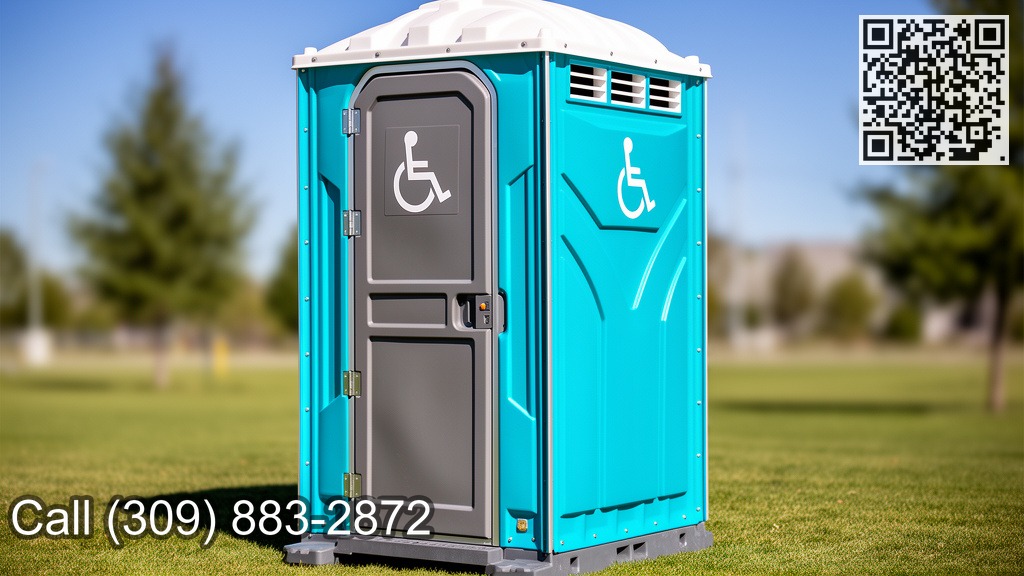
A couple of difficulty spots come up again and again:
- Ordering as well couple of obtainable units for the cluster.
- Placing the accessible device without an easily accessible route.
- Forgetting that ramps and landings should also fulfill ADA technological requirements if they are needed.
- Treating the indoor dimension of the system as the only conformity issue.
- Failing to mark the system with the International Sign of Accessibility.
These are not unique lawful catches. They are practical mistakes, and the majority of them can be avoided in the planning stage. What helps is appointing someone the responsibility to evaluate the washroom arrangement as an availability concern, not simply a logistics question.
Renting with far better questions
If you are accountable for an ada mobile commode rental, the quality of the order typically depends upon the concerns asked before distribution day. A short phone call can reveal whether the vendor and the website group are speaking exactly or simply using broad sales language.
Good planning inquiries normally sound like this: The amount of devices remain in each collection? Which systems are assigned obtainable? Exactly how will the accessible course be kept from arrival through failure? Will the positioning surface remain usable if weather condition modifications? If a ramp or landing is required, that is seeing to it it complies?
Notice what those questions do. They move the discussion from item labels to actual use. That is precisely where it belongs. An ada certified mobile toilet is not certified in any meaningful feeling if a person can not approach it, determine it, enter it, maneuver within it, and utilize it with the needed clearances.
Why enforcement focus matters, even outside washroom planning
ADA conformity is not becoming much less appropriate. If anything, the broader compliance setting has actually come to be more active. One recent sign of that broader activity is the Division of Justice guidance extending the due date for certain state and local government web and mobile ease of access guidelines into 2027 for larger entities. That advancement has to do with digital access, not portable commodes, however it tells you something essential about the environment: access commitments remain to receive formal interest across sectors.
For organizations that take care of occasions, public programs, federal government functions, and short-term facilities, that more comprehensive atmosphere ought to be a pointer. Accessibility is not a side concern took care of just when somebody grumbles. It is part of exactly how services are anticipated to be delivered.
That is one factor I motivate customers and coordinators not to think of the ada mobile restroom as a box to tick. A much better state of mind is this: if you are creating a momentary public-facing atmosphere, gain access to belongs in the design from the start.
What "compliant" should imply to renters and organizers
The word certified gets utilized loosely in this industry. Some people utilize it to explain any bigger mobile system. Others utilize it to mean the vendor carries a version intended for availability. Neither understanding is total enough.
For renters and coordinators, certified must suggest that the available portable commode matter has actually been scoped properly for the cluster, that the available units are understood the required symbol, that individuals can get to the system by an accessible route, that the entryway comes, that any kind of required ramps or landings satisfy technical demands, which the device itself pleases the relevant toilet-room technological rules.
That is a higher bar than marketing language, but it is likewise a fairer one. It mirrors exactly how individuals in fact encounter short-lived washrooms in the field. Nobody experiences conformity as a brochure summary. They experience it at the door, on the course, inside the transforming room, and in the ease or problem of utilizing the center independently.
A functional means to think about risk
Portable hygiene is among those event aspects that attracts attention just when it goes wrong. Ease of access failures become visible fast, and once they do, there are few elegant repairs available in the middle of an occasion day.
If you have ever needed to relocate devices after participants get here, you know exactly how disruptive it can be. Trucks require gain access to, courses obtain obstructed, people wait, and the issue ends up being public. That is why access review should take place before delivery, once more at positioning, and once more after the bordering website aspects are installed.
A simple field evaluation can protect against an unexpected number of issues:
- Count each commode collection and confirm the accessible-unit minimum.
- Confirm the accessible system is noted with the International Sign of Accessibility.
- Walk the path as an individual would, from the common circulation path to the system entrance.
- Check whether any ramp or landing involved in accessibility has actually been treated as an ADA need, not a convenience item.
- Make sure later site modifications, like secure fencing or storage, do not obstruct method or maneuvering.
That brief evaluation has a tendency to catch one of the most usual troubles while there is still time to fix them.
The human side of a technological standard
It is simple to discuss the 2010 standards in lawful or building terms. The lived truth is simpler. An individual comes to an event or temporary site requiring a restroom. They must not need to browse longer, traveling further without factor, or request aid due to the fact that the easily accessible choice was badly planned.
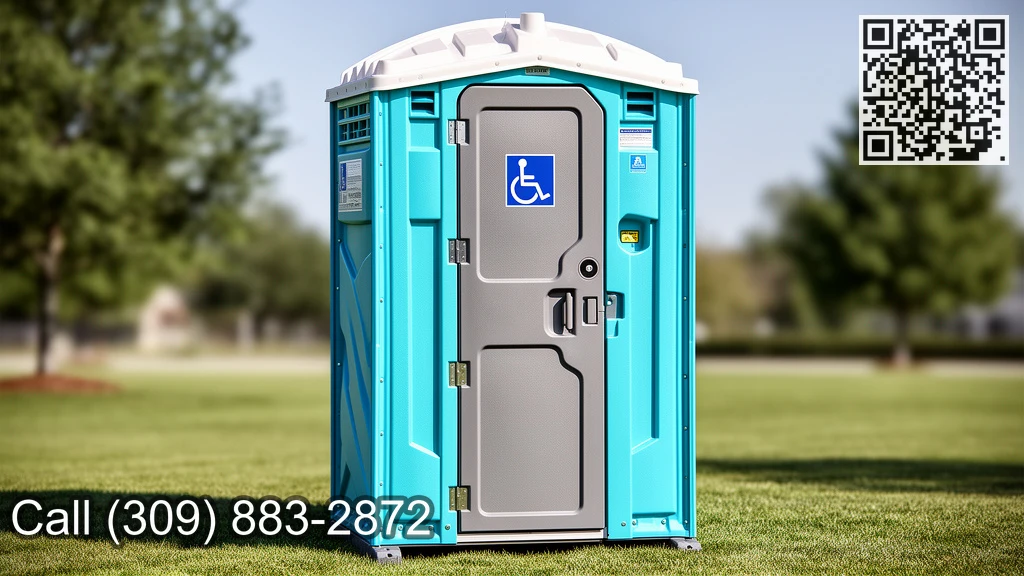
That is why the requirements matter. They turn an unclear assurance of accommodation into concrete needs. A minimum of 5 percent in each cluster should be accessible. The accessible device should be identified effectively. It needs to have an accessible path and entrance. If ramps or touchdowns are needed, those aspects should comply too. The unit must satisfy the relevant technological needs for bathroom rooms, consisting of clearances and navigating needs.
For anybody ordering ada compliant mobile commodes, those are the essentials worth keeping in mind. Ease of access is not accomplished by getting a bigger box and hoping for the most effective. It is attained via correct numbers, right placement, correct recognition, and appropriate setup.
Handled well, an ada accessible portable washroom does something quietly important. It allows individuals take part in the same occasion, use the same website, and move with the day with much less friction and more freedom. For a temporary service, that is a meaningful result.
 Ask ChatGPT
 Ask Grok
 Ask Perplexity
 Ask Claude
 Ask Google AI
 Ask You